
What parents need to know
La série Fire Emblem est une série de jeux de rôles stratégiques de longue date: Fortune’s Weave est le 18e épisode, et le tout premier épisode est sorti en 1990 sur NES (mais la série n’est arrivée en Amérique du nord qu’en 2003 sur Game Boy Advance).
Fire Emblem: Fortune’s Weave follows in the footsteps of Fire Emblem: Three Houses, which was released on the original Switch in 2019. L’histoire se déroule d’ailleurs dans le même univers, mais sur un continent voisin.
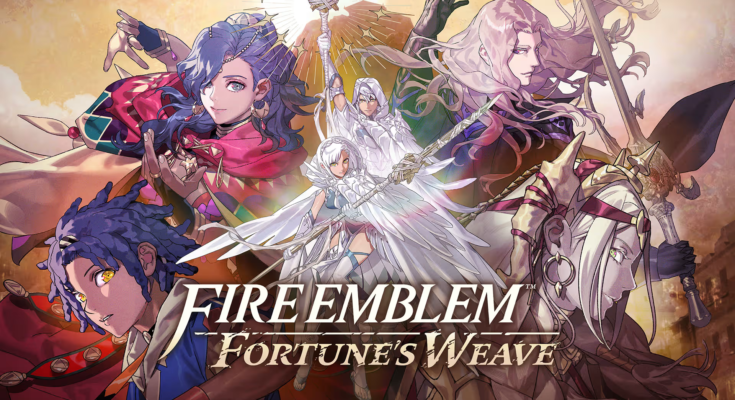
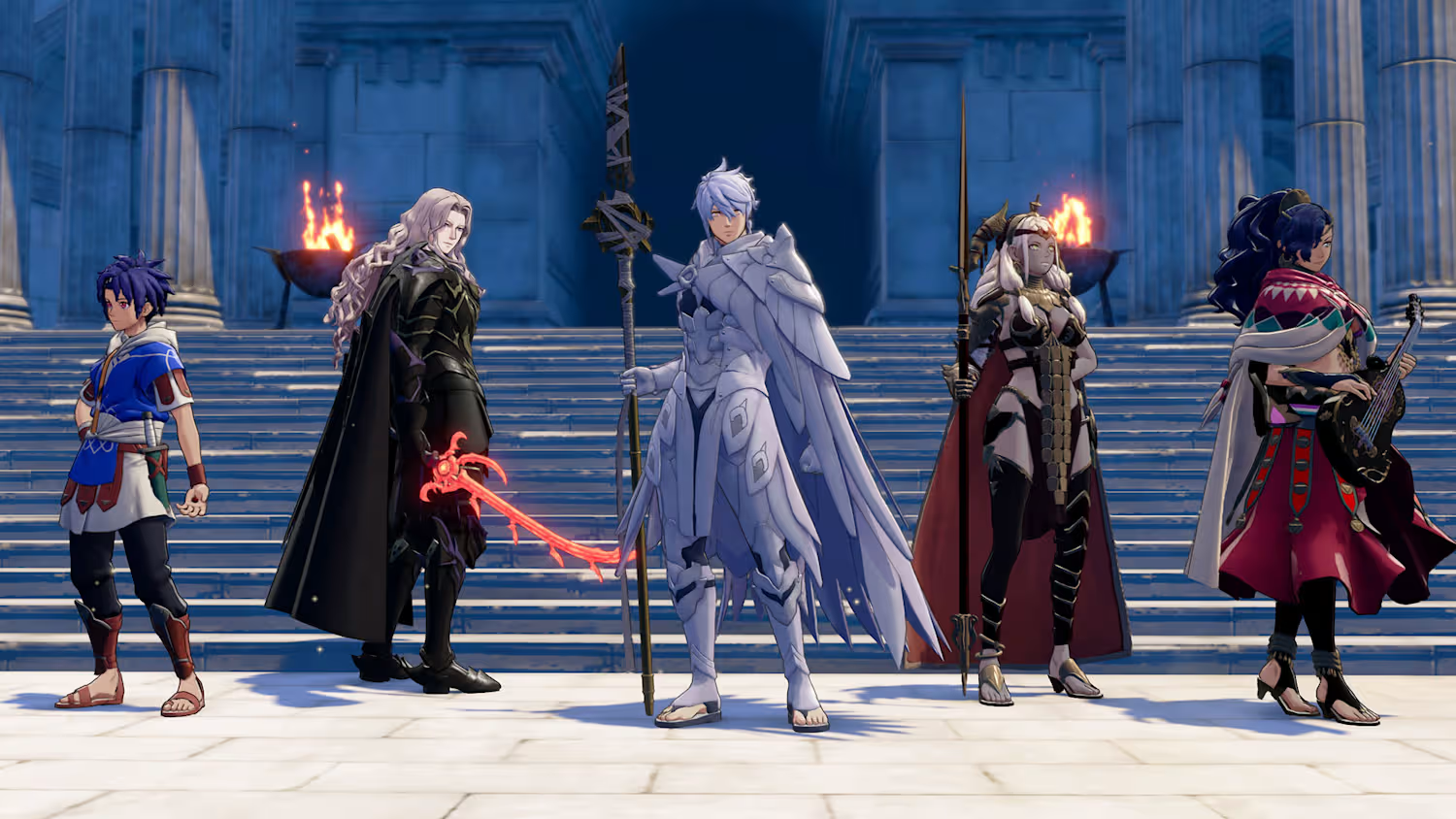
You play as a character that you create yourself (his canonical name is Eshmel, but you can name him as you wish), a hero magically created to restore balance to the world, and there is a lot to do, because when you wake up, all civilization has been practically annihilated by the forces of evil. So you have to go back in time and change the fate of four heroes (Cai, Dietrich, Theodora and Leda) whose paths crossed a few years ago during a war tournament, but who unfortunately all perished. Vous devez intervenir pour changer leur destin et vous assurer qu’ils seront à vos côtés pour combattre le mal et changer l’avenir.
For a rare time, Fire Emblem: Fortune’s Weave features two types of combat. First of all, there are the usual tactical battles in the franchise. You control each of your units on a grid seen from above, much like a game of chess. Each unit has its own strengths and weaknesses, and the weapons they use are powerful against some types of enemies but weak against others. Par exemple, un guerrier volant à dos de Pégase sera facilement mis à terre par un archer, et un guerrier dans une épaisse armure verra les coups d’épées rebondir sur sa cuirasse, mais sera cuit vivant par les sorts des sorciers.
Le terrain a également son influence; on évite plus facilement les coups quand on est dissimulés dans la forêt, une unité à cheval se déplace difficilement dans le sable, et ainsi de suite.
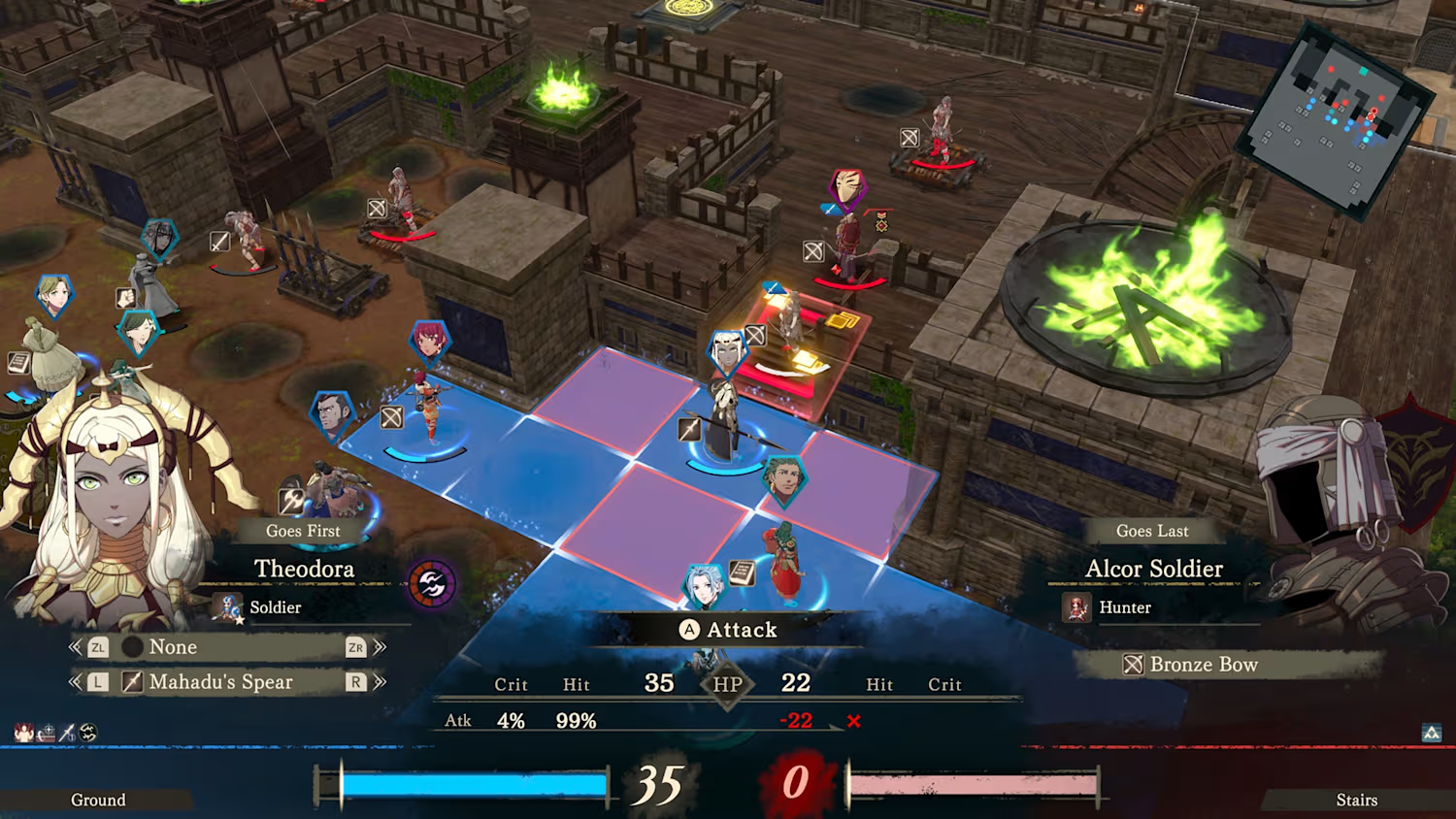
Each of the characters must be trained over the course of the fights. Each assault we survive, each ally we heal and each enemy defeated gives us experience that allows us to level up, and improve our abilities (the distribution of points is random, and can greatly influence the usefulness of a character as we progress). On peut également acheter et améliorer les armes que l’on attribue à nos combattants pour les rendre plus redoutables en combat.
Interpersonal relationships also give our units a hand in combat. By fighting side-by-side or participating in activities together outside of combat, characters can improve their bonds with each other. Quand ils se retrouvent près d’un personnage avec qui ils ont des liens de qualité lors d’un affrontement, leurs performances seront meilleures, et ils pourront même être protégés d’un coup fatal.
The other type of combat takes place in the many dungeons that we can explore throughout our adventure. In dungeons, both exploration and confrontation take the form of a more traditional turn-based role-playing game (think Final Fantasy or Persona, for example). You choose your attacks, the opponent chooses theirs, and you try to get out of it with as little damage as possible. On peut également faire des attaques en équipe avec nos alliés.
Otherwise, between battles, you are free (during the first act, at least) to explore the capital, Dagsion, and the entire continent of Dagda. À Dagsion, on peut mener une foule d’activités: on peut s’entraîner pour améliorer le maniement de certaines armes par les unités de notre choix (même si nos unités sont prédisposées à certains types de combats, rien ne nous empêche de les former à d’autres armes), aller au théâtre ou dans les bains thermaux, faire du bénévolat dans les temps.
But most importantly, we can improve our bonds with the other fighters who are in the capital for the Heroic Games and who will agree to join our troops if we befriend them. To do this, we must offer them the gifts they prefer, invite them to the theater or invite them to share meals. Éventuellement, certains d’entre eux accepteront notre offre de recrutement ou nous proposerons une quête à remplir avant de rejoindre nos rangs.
On est libres de compléter l’histoire d’un seul ou de tous les protagonistes avant d’entamer les deux actes finaux. Évidemment, plus on a complété et «sauvé» de protagonistes, plus notre armée sera nombreuse et puissante, et mieux nous serons équipés pour faire face aux forces démoniaques et sauver le monde.
Details
Level of experience required
| Age | 3+ | 7+ | 12+ | 16+ | 18+ |
|---|---|---|---|---|---|
| Beginners |  |
|
 |
|
|
| Intermediate | |
|
|
|
|
| Experienced | |
|
|
|
|
Evaluation
Fire Emblem is a war game, and if you don’t see blood as such, it is clearly established that the units die at the end of the fighting, and you have to kill creatures but also humans to progress. Some characters use a weapon that looks very similar to a pistol.
There is romance and sexual innuendo, but no nudity or sex scenes per se. Several female characters wear very revealing costumes.
As the voices are not available in English, you have to know how to read to be able to understand the story. You also have to know how to read to understand the tables that show us the damage at the end of our fights, and to understand the different capacities of the units. We use a lot of invented terms specific to this universe.
Our characters unite to defeat evil, but some are more ethically grey than others. Some characters talk about their love for alcohol, and we can offer them alcohol to encourage them to join us.
Being turn-based, Fire Emblem: Fortune’s Weave doesn’t really require skill to manipulate the controller. However, it is a strategy game that can be complex, especially if we choose to make the death of our units permanent.
At a retail price of $99.99 CAD ($109.99 in physical format), you won’t be fooled into thinking this is an affordable title. However, the amount of content offered in this title helps a lot to make the bill easier to digest.
Local game modes
Story Mode
Online Game Modes
None.
Expansions/Add-ons (DLC)
Nothing announced for the moment, but the last episodes have been entitled to downloadable content. It would therefore not be surprising if the situation were repeated here.
Our opinion
Fire Emblem: Fortune’s Weave is a DENSE game. Imagine a huge all-you-can-eat buffet with mountains of different dishes, and you’ll get an idea of how it’s going to feel like to play this new installment in Nintendo’s role-playing game series.
But fortunately, quality does not give way to quantity; it is without a doubt the most polished episode of the franchise, dethroning the already excellent Three Houses. Surpassing the three protagonists of Three Houses, we are now offered 4 four protagonists, each with a story that repeats itself much less. This makes the lifespan even longer.
The gameplay system is also more elaborate than ever, with new classes being added, such as the charioteer, an archer driving a Roman-inspired chariot that can knock down enemies, or the Ornius horseman, a versatile warrior who moves quickly on the back of an ostrich-like animal.
The weapon degradation system has also been changed; normal attacks no longer wear out our weapons, but special skills do. Once a weapon’s durability is depleted, it is not destroyed, but it is greatly weakened. Having played a ton of games in the franchise, we find this system a little too generous to players. However, for newcomers, it’s a reasonable compromise between difficulty and fun.
Let’s also talk about the difficulty, since this is often a contentious point when we talk about the franchise. In the past, Fire Emblem episodes had a reputation for being very, very difficult. I can confirm myself that I let out a few screams of frustration in my teenage years in front of Path of Radiance when I saw one of my units fall under the blows of an enemy out of nowhere.
But since the “rebirth” brought about by Fire Emblem Awakening in 2013, the franchise has calmed down considerably. First of all, we can choose if we want the death of our units to be permanent. But even setting the difficulty to “Hard” and selecting permadeath, I have to admit that Fortune’s Weave isn’t the most difficult installment in the series, mainly because of the divine sand that allows us to go back when a decision leads to unintended consequences.
That being said, the difficulty didn’t spoil our fun (to be 100% honest, at the time of writing, I can’t wait to finish my writing to go back to playing a little more!)
We also have to mention the addition of this traditional turn-based combat system in dungeons. This is far from the most complex and nuanced combat system in the world. But these fights occupy a relatively limited place in the game, and they perfectly fulfill their mission of renewing the experience and allowing us to change the air a little between two long tactical confrontations or in a long exploration session.
The world of Dagda is vast and full of secrets. We also enjoy navigating this map, and even after dozens of hours of play, we barely feel like we’re scratching the surface of what’s on offer. You can capture new mounts, grow vegetables, fish, search for merchants offering rare goods, discover dungeons… the possibilities are dizzying.
In fact, this may be one of the few flaws in Fortune’s Weave; it’s stunning. In our first chapter as a protagonist, we feel overwhelmed by the massive amount of options available to us. It’s almost an exercise in letting go to accept that you won’t be able to see everything, do everything, and recruit everyone. We will have to leave some for our next games. It’s a problem, but a really beautiful problem.
The story is intriguing, but still requires a certain level of commitment from the players. Since it is told to us through the story of four different protagonists, we have the impression of assembling a puzzle whose image becomes clearer over the course of many hours. It’s an interesting story, but it requires a lot of patience.
Visually, without being the most ambitious game in the Switch 2 library (the price would probably go to the new version of The Witcher 3, but that’s another story..), Fire Emblem stands out with a remarkable visual art direction. We immediately get attached to certain characters because of their looks, and Dagsion, with its architecture somewhere between ancient Rome and North Africa, is an interesting setting for our adventures.
In short, the Intelligent Systems team offers us with Fire Emblem: Fortune’s Weave the most accomplished version of their flagship series. It is an episode of incredible generosity. In fact, if you buy it now, we doubt that you will have finished it before Christmas, in any case, not without harming your responsibilities!
